WhatsApp Business Alternatives: Which ones are relevant for companies?
WhatsApp has established itself globally as the top instant messenger for private individuals. However, for many companies, alternative messenger services are not just a matter of variety, but also of functionality, security, and data protection compliance. Choosing the right business alternative is crucial for effectively managing communication with customers.
Many of these alternatives allow registration with an email address, which offers additional advantages in terms of data protection and the security of personal data.
That is why we are showing you the 5 + 1 most popular instant messengers here that can serve as successful alternatives to the private WhatsApp or WhatsApp Business app.
WhatsApp in a business context: A critical look

WhatsApp is used worldwide as THE leading means of private communication. As one of the most successful messaging platforms, it offers numerous advantages for business communication, such as a broad user base and ease of use.
The use of private WhatsApp in a business context, however, raises serious questions, particularly regarding compliance with the General Data Protection Regulation (GDPR) in Europe. Although the app is known for its fast and user-friendly operation and is used for both private and business purposes, its use in companies requires a different approach. But more on that later. Messaging apps offer special features that improve collaboration and communication within teams, thereby increasing efficiency and productivity. They also enable effective communication with customers.
Alternative to WhatsApp: Data protection and GDPR compliance
The GDPR aims to give citizens more control over their personal data and to standardize laws for international business within the EU. Since WhatsApp is managed by Facebook (now Meta), concerns arise regarding data protection and data security when personal data is processed in a business context for revenue purposes. Meta has faced criticism in the past for its data protection practices. Registering with an email address offers an alternative option that does not require a phone number and can therefore improve data protection.
For example: An appealing Google Business Profile that contains up-to-date information and positive reviews is also crucial for attracting potential customers and facilitating contact with them via Google Business Messages, while simultaneously ensuring compliance with the GDPR and data protection.
Professionalism and brand perception
Beyond data protection concerns and notifications, using the free private WhatsApp for business purposes naturally raises questions regarding professionalism and brand perception. While WhatsApp may be suitable for informal conversations, it lacks the structuring features for management and 1-to-many communication required for professional business communication. This includes aspects such as brand personalization, advanced customer service features, and integrations with CRM systems. Using messaging in business chats can also make communication more efficient. Messaging apps offer special features that improve collaboration and communication within teams, especially for remote or distributed teams.
Advantages of WhatsApp alternatives for companies
By using WhatsApp alternatives, companies can significantly improve their communication with customers and employees while simultaneously increasing their security and data protection. Some of the most important advantages of WhatsApp alternatives for companies are:
- Increased security: Many WhatsApp alternatives offer end-to-end encryption and are economical with metadata, which increases the security of communication. This is particularly important for companies that exchange sensitive information.
- Improved communicationFeatures such as group chats and broadcast messaging enable more efficient communication within the company and with customers. These functions are particularly useful for coordinating teams and disseminating important information.
- Increased flexibilityWhatsApp alternatives allow for communication across various devices and platforms, which increases flexibility and accessibility. This is particularly advantageous for companies with mobile or remote teams.
- Better integrationMany WhatsApp alternatives offer integrations with existing systems and processes, such as CRM systems and customer service platforms. This facilitates the management and automation of business processes.
- Increased controlCompanies have more control over their communication through features such as managing access credentials and restricting functions for specific departments. This helps to structure communication and ensure that only authorized individuals have access to sensitive information.
What is end-to-end encryption?
End-to-end encryption is a security standard where only the participants in a chat can access the content. When implemented reliably, neither app operators nor third parties can read the messages. This means that data is encrypted during transmission and only the sender and recipient can decrypt the messages. This security standard is particularly important for companies that exchange sensitive information via messaging services. End-to-end encryption ensures that confidential data remains protected and does not fall into the wrong hands. This increases not only security but also customer trust in the communication platform.
WhatsApp alternatives at a glance: What the market has to offer
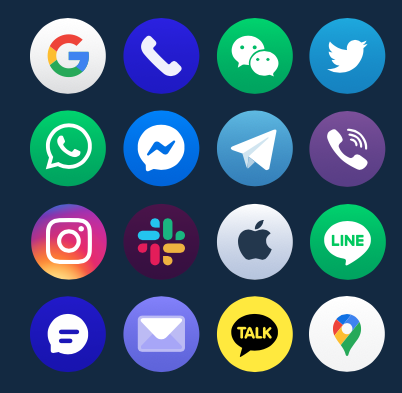
There are various emerging alternatives to the private version of WhatsApp that can also help address the aforementioned issues. Among the five best WhatsApp alternatives that companies can use to establish effective customer communication are: Messaging apps also offer significant advantages for team collaboration by improving communication and efficiency within work groups.
- TelegramThe third most popular messaging service in Germany is seeing a significant increase in users. With optional end-to-end encryption, Telegram is a cloud-based messenger. Its features, such as chatbot support, group chats with up to 5,000 people, and API integration with customer service platforms, make it an optimal choice for companies. Telegram has also recently introduced voice chats in channels, which offers companies another wayto interact with their audience. Furthermore, Telegram now offers the option to share text and photos in channels, making interaction with customers even more versatile.
- SignalSignal is a secure messaging app funded by donations. It offers an excellent way for small businesses and sole proprietors to communicate with privacy-conscious customers via "Secret Chats." Due to its distinct security and privacy features, Signal is currently in the spotlight and is enjoying great popularity among users who value data protection. The app is gaining importance internationally and in Germany due to its strong security features and terms of use.
- Facebook Messenger:Facebook Messenger is the third most popular messaging app in Germany and is seeing a significant increase in users. It combines social networking, an advertising platform, and messaging in one application. Specifically for businesses, it offers various service features such as chatbots, automated greetings, message templates, and video chats as an alternative to WhatsApp. API integration with customer service platforms enables advanced customer service functions.
- Threema Work: Threema, a paid messaging app, is a popular secure messaging application in German-speaking countries with a clear business model and well-known privacy features. Companies can create news feeds and chatbots for communication. API integration with customer service platforms enables advanced customer service capabilities. Threema's commitment to data protection and security makes it a reliable choice for companies that value these aspects.
- SMS: SMS works on all platforms and does not require internet access. By integrating APIs with customer service platforms, advanced customer service options can be offered. Although not as innovative as other technologies and lacking end-to-end encryption, SMS is a universally understood form of communication. In Germany, it remains widely used, especially for transactions, status updates, and two-factor authentication.
- ChatWerk Omnichannel Messenger : A comprehensive messaging platform, which is GDPR-compliant, serves as an alternative to private WhatsApp. It combines the features of the WhatsApp Business API, Telegram, Facebook Messenger, Instagram, and Google Business Messages in one place. ChatWerk also offers messaging automation, WhatsApp marketing via messenger newsletters, and automation with chatbots that work across all the aforementioned messengers. The platform is connected to HubSpot and various industry-specific providers such as Numbirds and thus serves over 50 different industries. ChatWerk can be used as a no-code solution via app or browser, just as customers are accustomed to with WhatsApp. In addition, the API interface is available to all customers free of charge for even greater performance.
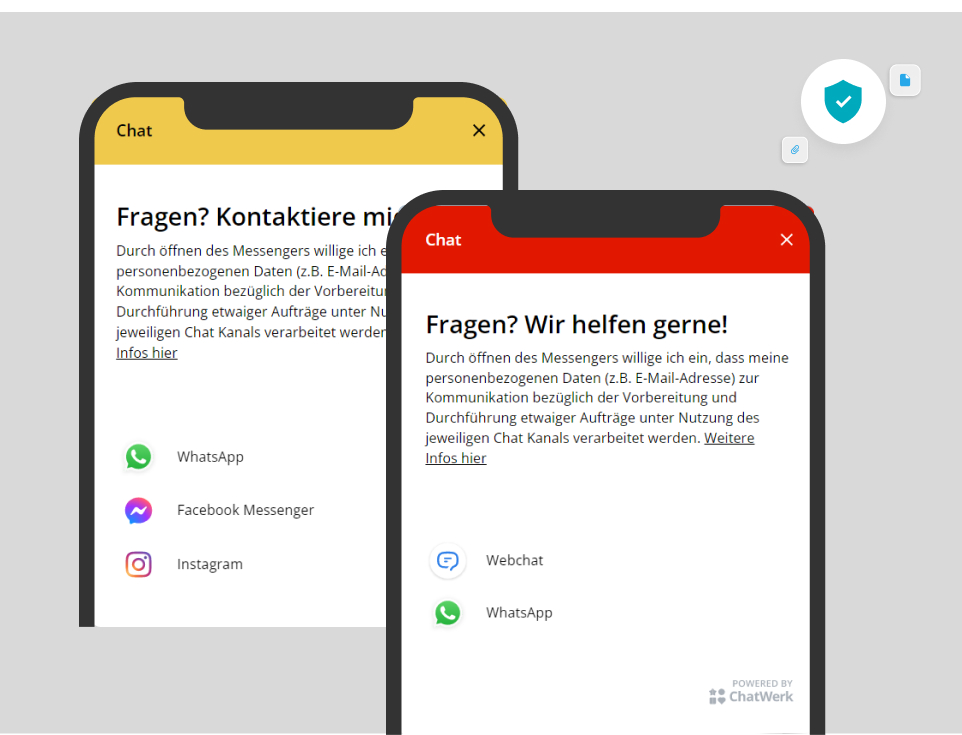
Keep in mind that the choice of platform significantly influences the satisfaction of your audience. Always consider preferences, comfort levels, and business requirements. Data protection, CRM data, and API integrations are crucial elements. Ideally, you should provide your customers with as many messengers as possible and let them decide which one they want to use to contact you. Incidentally, ChatWerk solves this very elegantly with its GDPR-compliant messenger touchpoint.
There are various emerging alternatives to the private version of WhatsApp that can also help address the aforementioned issues. Among the five best WhatsApp alternatives that companies can use to establish effective customer communication are: Messaging apps also offer significant advantages for team collaboration by improving communication and efficiency within work groups.
- TelegramThe third most popular messaging service in Germany is seeing a significant increase in users. With optional end-to-end encryption, Telegram is a cloud-based messenger. Its features, such as chatbot support, group chats with up to 5,000 people, and API integration with customer service platforms, make it an optimal choice for companies. Telegram has also recently introduced voice chats in channels, which offers companies another wayto interact with their audience. Furthermore, Telegram now offers the option to share text and photos in channels, making interaction with customers even more versatile.
- SignalSignal is a secure messaging app funded by donations. It offers an excellent way for small businesses and sole proprietors to communicate with privacy-conscious customers via "Secret Chats." Due to its distinct security and privacy features, Signal is currently in the spotlight and is enjoying great popularity among users who value data protection. The app is gaining importance internationally and in Germany due to its strong security features and terms of use.
- Facebook Messenger:Facebook Messenger is the third most popular messaging app in Germany and is seeing a significant increase in users. It combines social networking, an advertising platform, and messaging in one application. Specifically for businesses, it offers various service features such as chatbots, automated greetings, message templates, and video chats as an alternative to WhatsApp. API integration with customer service platforms enables advanced customer service functions.
- Threema Work: Threema, a paid messaging app, is a popular secure messaging application in German-speaking countries with a clear business model and well-known privacy features. Companies can create news feeds and chatbots for communication. API integration with customer service platforms enables advanced customer service capabilities. Threema's commitment to data protection and security makes it a reliable choice for companies that value these aspects.
- SMS: SMS works on all platforms and does not require internet access. By integrating APIs with customer service platforms, advanced customer service options can be offered. Although not as innovative as other technologies and lacking end-to-end encryption, SMS is a universally understood form of communication. In Germany, it remains widely used, especially for transactions, status updates, and two-factor authentication.
- ChatWerk Omnichannel Messenger : A comprehensive messaging platform, which is GDPR-compliant, serves as an alternative to private WhatsApp. It combines the features of the WhatsApp Business API, Telegram, Facebook Messenger, Instagram, and Google Business Messages in one place. ChatWerk also offers messaging automation, WhatsApp marketing via messenger newsletters, and automation with chatbots that work across all the aforementioned messengers. The platform is connected to HubSpot and various industry-specific providers such as Numbirds and thus serves over 50 different industries. ChatWerk can be used as a no-code solution via app or browser, just as customers are accustomed to with WhatsApp. In addition, the API interface is available to all customers free of charge for even greater performance.
Keep in mind that the choice of platform significantly influences the satisfaction of your audience. Always consider preferences, comfort levels, and business requirements. Data protection, CRM data, and API integrations are crucial elements. Ideally, you should provide your customers with as many messengers as possible and let them decide which one they want to use to contact you. Incidentally, ChatWerk solves this very elegantly with its GDPR-compliant messenger touchpoint.
Lerne noch mehr über Kundenkommunikation
Weitere spannende Blogartikel rund um Marketing, Automatisierung und digitalen Kundenservice.