Do you want to make your recruiting more efficient, save time, and improve the candidate experience at the same time? Then you should keep chatbot recruiting on your radar. With recruiting chatbots, you can automate repetitive tasks like pre-screening or answering common applicant questions, taking a huge load off your HR team.
Let's take a closer look at the benefits, challenges, and practical applications of chatbots in recruiting.
Key Takeaways
- Recruiting chatbots automate the application process, improve efficiency, and relieve HR teams.
- 24/7 availability and improved communication boost the candidate experience and make companies more attractive.
- Although chatbots offer many advantages, companies must consider challenges such as Privacy Policy and emotional intelligence.
- The ChatFlow-Builder is presented as an effective tool for implementing chatbots and automation in the recruiting process.
What is a recruiting chatbot?
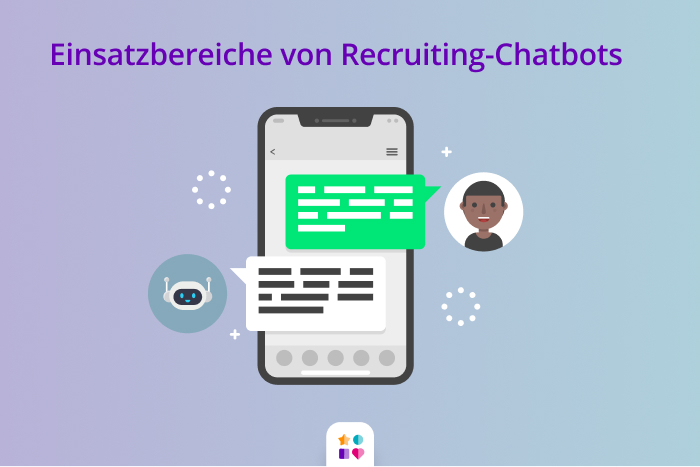
Recruiting chatbots are intelligent programs that facilitate dialogue between humans and technology by interacting via text input. They are usually based on Artificial Intelligence (AI) and Natural Language Processing (NLP), which allows them to communicate with applicants in a natural way. These chatbots are programmed to have their own personality, which makes the interaction even more pleasant.
A chatbot handles tasks such as:
- Answering frequently asked questions (FAQs),
- Pre-screening suitable candidates,
- Support and guidance throughout the application process.
The result? A significantly more effective and less time-consuming application process – for you and your applicants.
Pro tip: Use your chatbot strategically to improve the candidate journey. A chatbot can significantly shape the first impression candidates have of your company.
Benefits of chatbots in recruiting
The benefits of chatbots in recruiting are diverse, ranging from the automation of administrative tasks to the improvement of the candidate experience. Companies use recruiting chatbots to optimize their recruiting processes, increase efficiency, and improve communication with applicants.
The following sections provide a detailed look at the most important benefits.
Increased efficiency
Implementing recruiting chatbots can significantly increase efficiency across the entire HR department. By automating repetitive tasks such as answering frequently asked questions and pre-screening applicants, HR teams can save valuable time and focus on more demanding tasks. This not only relieves the burden on HR staff but also leads to significant cost savings.
Another advantage is the consistent efficiency that chatbots ensure. They can assist multiple applicants simultaneously in seconds. This accelerates the entire application process and significantly shortens the time from initial contact to hiring. In this way, chatbots contribute significantly to increasing productivity in recruiting.
24/7 availability
An outstanding benefit of recruiting chatbots is their round-the-clock availability. They are ready for use 24/7 and can answer applicant questions in real time at any time. This greatly improves the experience for applicants, as they are not dependent on HR team working hours and receive continuous support.
Constant accessibility thus contributes to the company's attractiveness as an employer.
Improved communication
Recruiting chatbots play a key role in improving communication with applicants. They offer direct and continuous interaction, which significantly improves candidate engagement and the candidate experience. By providing quick and clear answers to applicants' questions, they help to increase interest in the position and make the entire application process smoother.
Another example of better communication is the immediate answering of questions. This optimizes the candidate journey and ensures that applicants feel well-informed and supported. There are many examples of this.
Less stress for HR professionals
By automating time-consuming tasks, the chatbot relieves your HR department and, in particular, your recruiters. Staff can focus on core strategic tasks and process applications more efficiently.
Areas of application for recruiting chatbots
Recruiting chatbots offer numerous application possibilities that can make the entire recruiting process more efficient. They can be used in recruiting, employee management, and even further training. In industries such as retail and IT, they offer significant added value by quickly finding relevant job offers and answering applicant inquiries automatically.
Companies looking to optimize their recruiting processes will find recruiting chatbots to be a valuable source of support.
Automated screening
A key area of application for recruiting chatbots is the automated screening of applications. By using machine learning, chatbots can analyze applicant profiles in a targeted manner and identify qualified candidates more quickly. This significantly reduces the workload for HR teams and accelerates the selection process.
One example of such a system is the ChatFlow-Builder, an innovative recruiting chatbot that creates automation flows and sequence messages based on candidate behavior and responses, which makes life much easier for recruiters. This automation of pre-selection allows companies to work more efficiently and find the best talent faster.
Application support
Recruiting chatbots provide valuable support throughout the entire application process. They provide applicants with important information about the position and the company, and answer questions about the application procedure. This ensures smooth and efficient communication, making the application process more pleasant for candidates.
An HR bot can also optimize the collection of all required documents and ensure they are submitted in the correct order. This not only increases efficiency but also boosts applicant satisfaction, as candidates feel well-supported and informed.
Integration with ChatWerk's ChatFlow Builder
ChatWerk's ChatFlow Builder enables the seamless integration of recruiting chatbots into existing HR systems. This ensures a smooth workflow for processing applications and facilitates task automation. Integration with existing systems is crucial to fully leveraging the efficiency and effectiveness of recruiting chatbots.
With the ChatFlow Builder, companies can create customized chatbots tailored to their specific needs. This allows for optimal use of the technology and contributes to improving the entire recruiting process.
Costs and ROI of recruiting chatbots
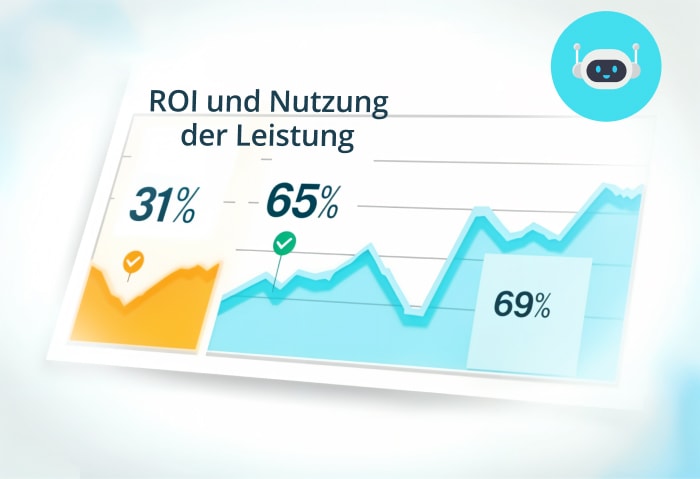
Implementing recruiting chatbots involves both one-time acquisition costs and ongoing operating expenses. The decision to use a recruiting chatbot should therefore be based on a careful analysis of potential cost savings and the expected ROI.
The following sections provide a detailed explanation of price ranges and potential savings.
Price range
Does buying a chatbot sound expensive? Not necessarily. Costs depend on the complexity of the chatbot—and the long-term savings can easily offset the investment:
Cost overview
- Simple chatbots (rule-based): from approx. €0–€1,000.
- Complex AI chatbots (continuous learning): from €20,000 plus monthly costs of €500–€1,000.
- Cost-effective and recommended alternatives such as the ChatFlow Builder start at €69 per month.
This price range shows that companies must plan their budgets carefully to find the best possible solution for their needs. Choosing the right chatbot can have a significant impact on efficiency and cost savings in the recruiting process.
Potential savings
Automating tasks with chatbots can lead to significant cost savings. Studies show that implementing chatbots across various industries can result in annual savings of up to 11 billion dollars. Human resources can be used more efficiently, particularly when handling simple inquiries and pre-screening applicants.
These potential savings make investing in recruiting chatbots particularly worthwhile for large companies. By reducing the workload and accelerating the recruiting process, companies can increase their efficiency while simultaneously lowering costs.
Challenges of chatbots in recruiting

Despite the numerous benefits, there are also challenges when using recruiting chatbots. The widespread adoption of chatbots in recruiting is hindered by technical limitations and insufficient data quality. Furthermore, inaccurate or inappropriate responses can lead to confusion and frustration among applicants.
These challenges must be taken into account when implementing chatbots in order to fully realize their potential.
Data protection and GDPR
One of the main challenges when using chatbots in recruiting is compliance with data protection guidelines. Companies must ensure they meet GDPR requirements and provide clear, understandable information about data processing. Concerns regarding data security are often the reason why companies hesitate to implement chatbots.
Especially when using WhatsApp in recruiting, it is important to use end-to-end encryption and obtain applicant consent before processing any data. This ensures that applicant data is handled securely and confidentially.
Emotional intelligence
Chatbots struggle to grasp emotional nuances, which limits their effectiveness in creative roles where emotional intelligence is required. Understanding the limitations of chatbots regarding emotional intelligence is crucial for effectively integrating them into the recruiting process.
Companies should be aware of these limitations and take appropriate measures to ensure the best possible candidate experience.
Tips for the successful implementation of recruiting chatbots
The successful implementation of recruiting chatbots requires careful planning and execution. A user-centric design for chatbot interactions can significantly increase success.
In the following sections, you will find important tips for implementation that will help you get the most out of your chatbot solution.
Define goals
Before you begin implementing a recruiting chatbot, it is important to define clear goals.
Here are some questions you should ask yourself:
- What specific tasks should the chatbot take over?
- Should it answer applicant questions?
- Should it handle the pre-selection?
- Should it support the entire application process?
Defining these goals helps maximize the benefits of automation and ensures that the chatbot is effectively integrated into the recruiting process.
Another important aspect is measuring success. Companies should establish clear criteria from the outset to evaluate the chatbot's performance. This allows for continuous optimization and adjustment of chatbot functionalities to achieve the greatest possible benefit.
Create WhatsApp chatbots using the ChatFlow Builder
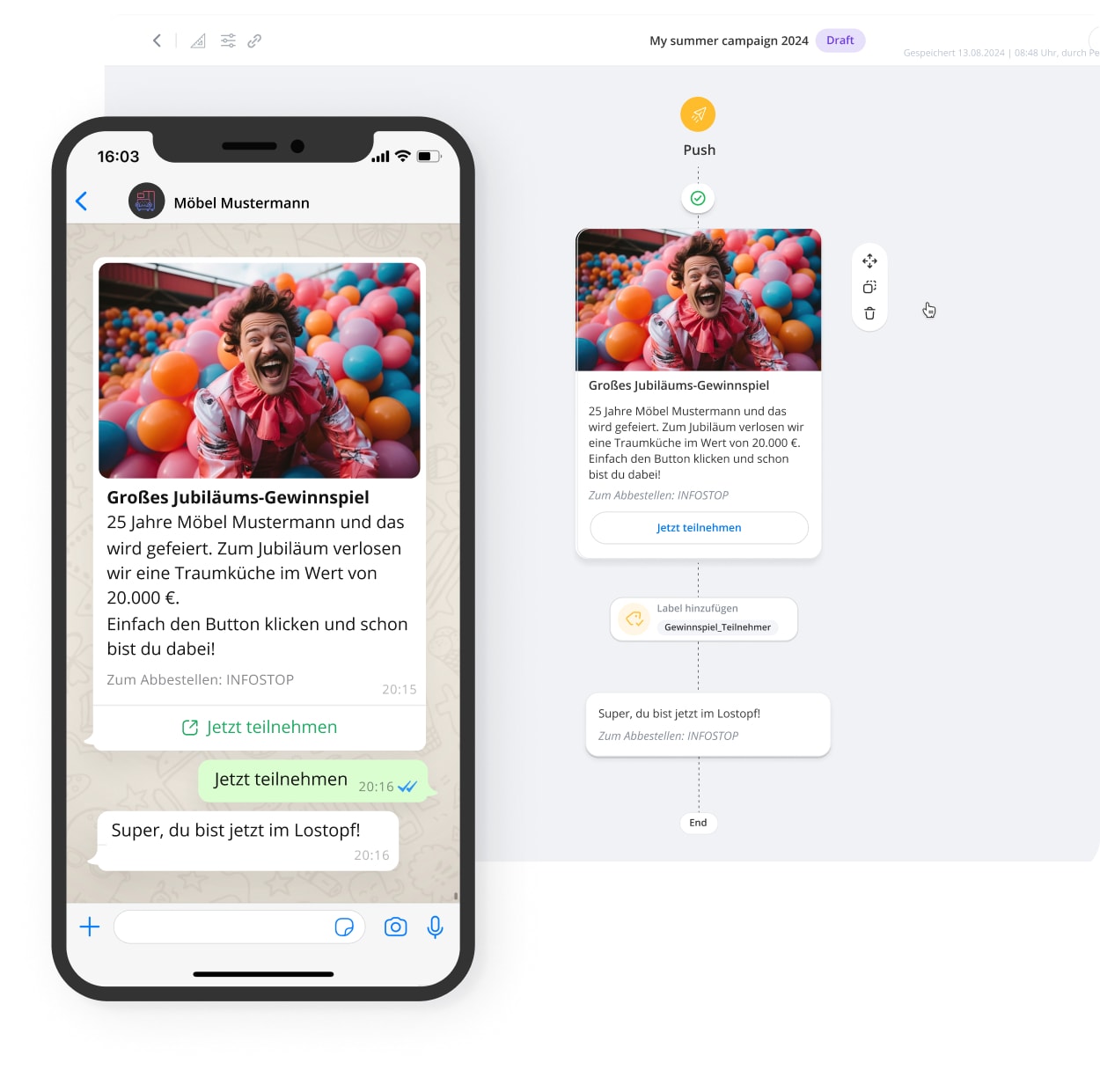
With the ChatWerk ChatFlow Builder companies can create WhatsApp chatbotsto optimize the recruitment process. This platform makes it possible to efficiently collect specific information, such as professional experience and salary expectations, via short application forms. Using WhatsApp chatbots in recruiting can automate and accelerate contact with potential candidates.
Thanks to its ease of use and the ability to create customized chatbots, the ChatFlow Builder offers an effective solution for companies looking to modernize their recruiting processes.
The integrated API and automated responses based on defined triggers, such as keywords or user actions, make the ChatFlow Builder a powerful tool for recruiting.
Employee training
To ensure the successful use of recruiting chatbots, it is crucial that the HR team is trained in how to interact with the bot. Training should cover both technical aspects and communication with the chatbot to ensure that employees can use it effectively. Practical exercises help to deepen the HR team's understanding and skills in working with chatbots.
Well-executed training not only promotes team acceptance of the chatbot but also ensures that it is optimally integrated into existing processes. This contributes to increased efficiency and an improved candidate experience.
Continuous feedback
An effective feedback system is essential for the continuous optimization of the chatbot. Regular feedback from users helps to evaluate the chatbot's performance and adapt it to user needs. This allows for early identification of issues and the implementation of adjustments to improve efficiency and the candidate experience.
Here is the text with the "question" integrated:
"The answer to the question is crucial for our understanding."
Feedback should be collected in a structured manner and evaluated systematically. This ensures that all relevant information is taken into account and that the chatbot is continuously developed. A well-organized feedback system is therefore a significant contributor to the success of a chatbot implementation.
After:
Feedback should be collected in a structured manner and evaluated systematically. Here are some key points to keep in mind:
- All relevant information should be taken into account.
- The chatbot should be continuously developed.
- A well-organized feedback system is a significant contributor to the success of a chatbot implementation.

Book a consultation with a chatbot expert
Before companies decide to implement a chatbot, it is advisable to book a consultation with an experienced chatbot expert. The chatbot expert at ChatWerk, in particular, can helpto develop the ideal chatbot for your specific requirements. This consulting process includes steps such as a non-binding preliminary discussion, workshops to define use cases, and the selection of suitable technology providers. An experienced consultant can provide valuable insights and recommendations to ensure that the chatbot is perfectly tailored to the company's specific needs.
By implementing LLM-chatbots early on, companies can secure a competitive advantage and significantly increase the efficiency of their recruiting processes. The consultation aims to fully leverage the benefits of LLM chatbots and optimize their integration across various communication channels.
Summary
Recruiting chatbots offer numerous benefits, from increased efficiency and 24/7 availability to improved communication. They can automate repetitive tasks, relieve HR teams, and significantly enhance the candidate experience. Costs and ROI vary depending on the chatbot's complexity and features, but the potential savings and efficiency gains make them a worthwhile investment, especially for large companies.
Implementing recruiting chatbots requires careful planning, HR team training, and continuous feedback to optimize performance. Data protection and emotional intelligence are challenges that must be addressed. With the right strategies and tools, such as ChatWerk's ChatFlow builder, companies can modernize their recruiting processes and position themselves as attractive employers. Take the next step and discover the possibilities that recruiting chatbots can offer your company.
Frequently Asked Questions
- What is a recruiting chatbot?
- A recruiting chatbot is an intelligent tool that asks potential applicants questions, provides information, and facilitates the entire application process. This makes the recruitment process more efficient and user-friendly.
- What are the benefits of recruiting chatbots?
- Recruiting chatbots are a great support system because they automate repetitive tasks, are available around the clock, and significantly improve communication with applicants. This makes the entire recruiting process much more efficient!
- What are the costs associated with implementing a recruiting chatbot?
- The costs for implementing a recruiting chatbot depend heavily on its complexity. Simple models can be free or cost a few thousand euros, while complex versions may cost up to 300 euros per month.
- What are the challenges of using recruiting chatbots?
- Recruiting chatbots face challenges such as technical limitations, insufficient data quality, and strict data protection requirements. Furthermore, they often lack emotional intelligence, which can make communication difficult.
- How can I make the implementation of a recruiting chatbot a success?
- To successfully implement a recruiting chatbot, you should set clear goals, train your HR team, and gather regular feedback. Expert support can also be very helpful.
Lerne noch mehr über Kundenkommunikation
Weitere spannende Blogartikel rund um Marketing, Automatisierung und digitalen Kundenservice.